Moving antiques in Chingford: damage prevention tips
Posted on 10/06/2026
Antiques are not just "old furniture". They are often delicate, oddly balanced, sentimental, and sometimes surprisingly unforgiving if you rush the move. If you are planning on moving antiques in Chingford, the real challenge is damage prevention: protecting finishes, joints, glass, veneer, carvings, and those little historical details that make each piece special. A scratched table leg or a chipped edge can take the charm right out of it. And let's face it, once the damage is done, you cannot just replace the original.
This guide walks you through the practical steps that reduce risk, from preparing the room to loading the van and setting everything down safely at the other end. It also covers when a cautious DIY approach makes sense, when it really doesn't, and how to plan a move so your antiques arrive in one piece, not in three. If you are already thinking about broader moving logistics, it may also help to read how to keep a house move calm and organised and some practical packing insights for a smoother move.

Contents
- Why damage prevention matters for antiques
- How careful antique moving works
- Key benefits and practical advantages
- Who this is for and when it makes sense
- Step-by-step guidance
- Expert tips for better results
- Common mistakes to avoid
- Tools, resources and recommendations
- Law, compliance, standards and best practice
- Options, methods and comparison
- Case study or real-world example
- Practical checklist
- Conclusion
- Frequently asked questions
Why Moving antiques in Chingford: damage prevention tips Matters
Antiques are vulnerable for reasons that are easy to underestimate. Many pieces were built before modern adhesives, machine-fastened joins, or laminated surfaces became common. That means old timber can be dry, brittle, and a bit temperamental. Veneer can lift. Jointed legs can wobble. A decorative mirror can shift inside its frame. Even dust, if rubbed across a polished surface during handling, can act like fine sandpaper. It sounds dramatic, but it is exactly the sort of thing that turns a careful move into a regretful one.
In Chingford, there is also the practical side of local moves. Homes on tight streets, stairwells in flats, awkward turns, and rainy days all add small risks. A piece might be perfectly safe in a quiet room, then suddenly exposed to a doorway that is 2cm too narrow or a hallway with a sharp corner. That is why damage prevention is not just about "wrapping it well". It is about planning the route, understanding the item, and reducing handling as much as possible.
For heirlooms, the value is often more than financial. A cabinet from a grandparent, a framed clock, a sideboard that has survived decades - these pieces carry memory. If you are unsure how much help you need, it may be worth comparing your broader move with dedicated support such as furniture removals in Chingford or looking at the company's insurance and safety approach before you start lifting anything heavy.
How Moving antiques in Chingford: damage prevention tips Works
Good antique moving is a sequence, not a single action. You identify the fragility points, prepare the piece, prepare the route, and then control every contact point during lifting, carrying, loading, transit, and unloading. That sounds methodical because, well, it is. But it also saves a lot of pain later.
The basic process is usually this:
- Assess the item. Check for loose joints, fragile surfaces, detachable parts, chips, cracks, and any previous repairs.
- Prepare the environment. Clear the path, protect floors and corners, and make sure the item can pass through every doorway and turn.
- Disassemble where appropriate. Remove shelves, glass panels, handles, and anything else that can move or rattle.
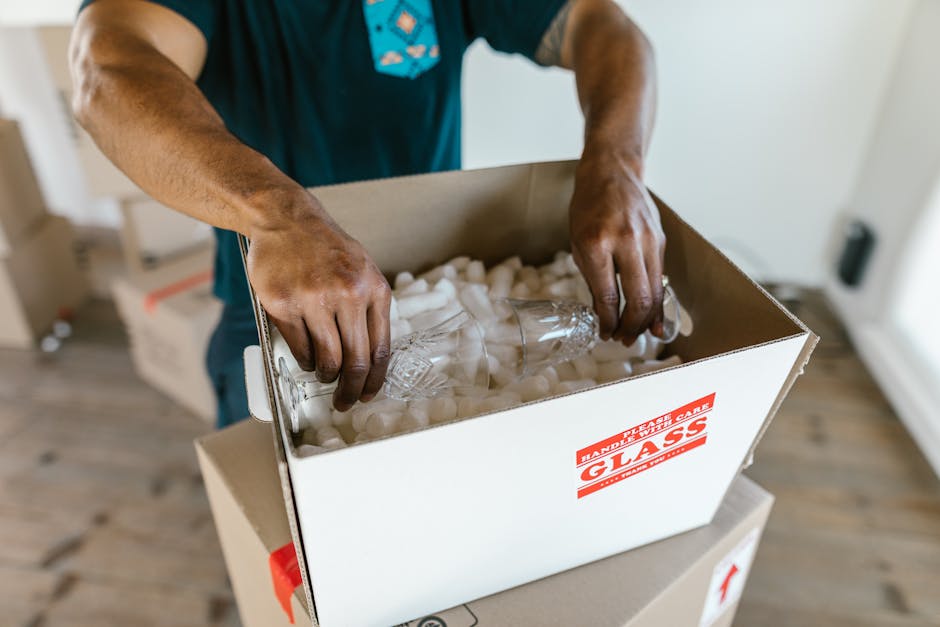
- Wrap correctly. Use layers that prevent scratching, vibration, and pressure points.
- Lift with control. Keep the item stable, avoid twisting, and use enough people or the right equipment.
- Load carefully. Secure the item upright where possible and stop it shifting during transit.
- Unload and place gently. Recheck for any movement damage before you remove protective layers.
There is a small but important point here: antiques are often damaged not by one big mistake, but by a few small ones. A slight wobble while carrying. A blanket that slips. A hard stop in the van. A quick pivot through a doorway. None of those sounds disastrous on its own. Together, they are exactly how corners chip and joints strain.
If the item is especially awkward, some readers use information from this guide on moving a piano without professional help as a reminder of how specialist handling changes the game. A piano is not an antique by default, of course, but the same principles apply: size, weight, balance, and fragility all matter at once.
Key Benefits and Practical Advantages
When you move antiques properly, you are not just avoiding visible breakage. You are protecting value, finish, structure, and resale potential. More importantly, you are reducing stress. That might sound obvious, but a calm move is usually a safer move. People do rushed things when they feel behind. They carry one side too high. They drag a piece "just for a second". That is when trouble starts.
The practical advantages are straightforward:
- Less surface damage: careful wrapping reduces scratches, scuffs, and rubbing marks.
- Better structural protection: stable lifting protects old joints and weak frames.
- Lower chance of breakage: controlled movement protects glass, porcelain, mirrors, and decorative components.
- Cleaner arrival: antiques spend less time exposed to dust, damp, and dirty hands.
- More predictable costs: avoiding damage is usually far cheaper than repairing it later.
- Less emotional strain: you are not holding your breath every time the piece passes a doorway.
There is also a quieter benefit: a well-managed move tends to be faster overall. Not frantic-fast. Just efficient. You prepare once, wrap properly once, and move without repeating mistakes. That matters when you are juggling a full home move, perhaps alongside other items like beds, sofas, or boxed books. If that sounds familiar, the advice in precise planning for moving beds and mattresses and secure your sofa for long-term storage may be useful too, because the underlying method is the same: protection starts before the first lift.
Who This Is For and When It Makes Sense
This topic matters to anyone moving furniture or decorative pieces with age, craftsmanship, or sentimental value. That could be one antique dresser, a pair of dining chairs, a Georgian mirror, a sideboard, a grandfather clock, or a collection of smaller heirlooms packed together in a van. It also matters if you are moving from a house to a flat, from storage to home, or between properties in the local area.
It makes especially good sense when:
- the piece is old, fragile, or hand-finished
- there is glass, marble, lacquer, veneer, or ornate carving involved
- stairs, narrow hallways, or awkward turning spaces are part of the route
- the antique has uneven weight distribution
- you do not have enough people to move it safely
- you need it stored temporarily before the final delivery
In our experience, people often ask whether they can "just get a man and van" for antiques. Sometimes yes, but only if the item is properly assessed and the handling plan is right. If the piece is simple and sturdy, that may be enough. If it is a family heirloom with delicate detailing, you may need something more careful. You can also look at man and van options in Chingford or a more flexible man with a van service depending on the job size and access needs.
Step-by-Step Guidance
Here is a practical way to handle antique moving without turning the day into a guessing game.
1. Inspect every item before touching it
Look for loose legs, wobbly joints, missing screws, cracked glass, lifting veneer, and old repairs that might fail under strain. Photograph the item from several angles. Not because you expect the worst, but because it helps you remember what "normal" looked like before the move.
2. Measure the item and the route
Measure height, width, depth, and any protruding handles or decorative features. Then check doors, stair turns, bannisters, lifts, and van openings. A lot of damage happens when someone realises at the last minute that a piece has to be tilted too sharply. That is the sort of moment you want to avoid.
3. Remove or secure loose components
Take out drawers, shelves, detachable mirrors, and glass inserts where it is safe to do so. If removal is not possible, immobilise the part so it cannot shift. Wrap loose hardware in labelled bags and keep them with the item, not in a random kitchen drawer somewhere. We have all been there. It's never where you thought.
4. Choose the right wrapping layers
Start with soft, clean wrapping to prevent scratches. Then add cushioning for impact protection. Finish with an outer layer that stays in place during transit. Avoid anything rough directly against polished surfaces. Newspaper can mark or transfer ink, and thin plastic without padding can trap movement rather than prevent it.
5. Lift with planning, not impulse
Assign roles before you start. One person leads, one stabilises, and one clears the route if needed. Keep the item close to the body, bend the knees, and move slowly. If an object feels too heavy or too awkward, stop there. No antique is worth a pulled back or a dropped corner.
6. Load in a stable position
Where possible, keep furniture upright or in its safest structural orientation. Secure it so it cannot slide, tip, or lean against abrasive surfaces. Soft straps, blankets, and load bars can help, but only if they do not press into delicate details.
7. Recheck at delivery
Before unwrapping everything, inspect the item in good light. Check corners, handles, feet, and joins. If something has shifted, you want to know immediately, not three days later when you are already putting the room back together.
Expert Tips for Better Results
Small improvements make a big difference with antiques. To be fair, some of the best damage prevention advice is boringly practical, which is probably why it works.
- Use clean materials only. Dust trapped under a blanket can scratch polished wood.
- Protect the floor and corners. A doorway chip is still damage, even if the antique itself arrives untouched.
- Never drag antique furniture. Even a short drag can stress joints and scuff feet.
- Watch humidity and rain. Wet blankets, damp air, or soggy paths are bad news for timber and upholstery.
- Keep antiques away from heat sources in the van. Sudden heat changes are not friendly to old finishes.
- Label every wrapped part. This is especially useful for dismantled items that need to go back together in the right order.
- Allow extra time. Antique moving should feel measured, not rushed. That is the whole point.
A useful habit is to think in contact points. What is touching the antique right now? What is touching the floor? What is touching the wall? What will happen if the van brakes hard? Once you start thinking like that, risk becomes much easier to control.
If the antique is part of a larger clean-out or move, it can also help to declutter first. Less clutter means fewer accidental knocks and less background chaos. A tidy route is a safer route. There is a related piece on making the moving journey less cluttered that fits nicely here.
Common Mistakes to Avoid
Most antique damage comes from predictable mistakes. The good news is that predictable mistakes are avoidable.
- Using the wrong wrapping: a blanket alone may not be enough, and plastic alone often creates friction.
- Leaving drawers and doors unsecured: movement inside the item can damage the frame from within.
- Trying to move too much at once: one overloaded trip is often riskier than two careful ones.
- Forcing items through tight spaces: if it does not fit comfortably, pause and reassess.
- Ignoring old repairs: a piece that was glued once may need extra support now.
- Placing heavy items on delicate ones in the van: this is a classic mistake and a costly one.
- Skipping route checks: a short hallway can be the real obstacle, not the van journey.
One more thing, because it catches people out all the time: don't assume an item is sturdy just because it looks heavy. Some antiques are heavy and fragile at the same time, which is a particularly annoying combination. A carved table can seem solid but still have brittle joints or veneer that won't forgive a knock.
Tools, Resources and Recommendations
You do not need a warehouse full of kit, but the right basics help a great deal. For most antique moves, the useful tools are simple and familiar.
| Tool or material | Best use | Why it helps |
|---|---|---|
| Soft moving blankets | Outer protection | Prevents scratches and surface rubbing |
| Bubble wrap or cushioning wrap | Fragile corners and ornaments | Helps absorb knocks and vibration |
| Corner protectors | Frames, cabinets, tabletops | Protects the most vulnerable edges |
| Removal straps | Carrying and loading | Improves control and reduces strain |
| Labels and marker pens | Detachable parts | Keeps assembly organised later |
| Floor coverings | Hallways and doorways | Reduces scuffs, slips, and grit transfer |
For storage between addresses, choose somewhere dry, clean, and stable. Basements, garages, and sheds can be risky if they swing between damp and cold. If storage is unavoidable, read up on storage options in Chingford and think carefully about how the item will be wrapped for the time it is away from home.
It can also help to think about the broader move kit. If you need packing materials, see packing and boxes in Chingford for a useful starting point. And if the antique is unusually bulky, bulky item removal advice may help you judge the level of handling required.
Law, Compliance, Standards, or Best Practice
For most homeowners, antique moving is less about formal regulation and more about safe practice. That said, there are still important standards of care to keep in mind. If you hire help, the people handling the move should work in a way that protects property and reduces injury risk. That usually means proper lifting technique, sensible team sizes, and suitable equipment for the job.
Best practice also means honest communication. If an antique is fragile, say so. If it has loose joints, say so. If access is tight, say so early. The more accurate the information, the safer the move. That is especially true in London-style properties where stair turns and parking can complicate the day quickly.
It is also sensible to understand the company's terms, safety approach, and complaint process before agreeing to a move. Those pages are not exciting reading, granted, but they do tell you how a business expects work to be handled and what happens if something goes wrong. You may find the health and safety policy, terms and conditions, and complaints procedure useful as part of your due diligence. If you want a broader view of what the business offers, the services overview is a sensible place to start.
Options, Methods, or Comparison Table
There is no single "best" method for every antique. The right approach depends on size, fragility, access, and how much help you have. Here is a simple comparison to make the choice clearer.
| Method | Best for | Pros | Watch out for |
|---|---|---|---|
| DIY with friends | Small, sturdy items | Cheaper, flexible, simple for short distances | Higher risk if the piece is awkward or fragile |
| Man and van support | Moderate items and local moves | More practical handling, useful for access issues | Still needs clear instructions and careful wrapping |
| Specialist furniture removals | Large, valuable, or delicate antiques | Better protection, better planning, less strain | Usually costs more, but often worth it |
For some households, the decision comes down to confidence. If you have to ask whether a piece is too awkward to move alone, it probably is. That is not weakness; it is common sense. And common sense saves furniture.
Case Study or Real-World Example
A local move in Chingford might look simple on paper. Imagine a homeowner moving a Victorian sideboard, two dining chairs, and a wall mirror from a first-floor flat into a house a few streets away. The distance is tiny. The risk is not.
The sideboard has a bowed front, old brass handles, and one drawer that sticks slightly. The mirror frame is ornate and the glass is original. The stairwell is narrow, and there is a bend halfway down that forces any large item to pivot. The obvious mistake would be to wrap everything quickly and hope for the best. The safer approach is slower.
The sideboard drawers are removed and labelled. The handles are cushioned. The mirror is wrapped separately and kept upright. Corners are padded before any lifting starts. One person leads the route down the stairs, another manages the rear end of the sideboard, and a third clears the landing. In the van, the mirror is secured upright with soft protection around the frame. Nothing rattles. Nothing shifts. The job feels almost uneventful, which is exactly what you want from an antique move.
That kind of calm result is rarely accidental. It comes from treating the move as a sequence of small protections rather than one big lift. If you want a broader picture of local moving conditions, you may also find small flat move guidance for the Ridgeway and the Larkswood Estate checklist helpful for route and access planning.
Practical Checklist
Use this checklist before moving day. It keeps the essentials in one place and helps you avoid last-minute scrambling.
- Inspect the antique for cracks, loose joints, chips, and unstable parts
- Photograph the item before wrapping
- Measure all doorways, stair turns, and van access points
- Remove or secure shelves, drawers, mirrors, and glass inserts
- Gather clean blankets, cushioning wrap, labels, and straps
- Protect floors, walls, corners, and banisters
- Assign roles to each person helping
- Plan the loading order in the van before lifting anything
- Keep the antique away from heavy items and sharp edges
- Check the piece again immediately after delivery
- Reassemble carefully and store hardware in one labelled place
Expert summary: antique moving is really about control. Control the route, control the wrapping, control the lift, and control the load. If one of those pieces is weak, the whole move becomes less secure. Keep it calm, keep it deliberate, and do not be afraid to slow down for a minute. A minute is cheaper than a repair.
Conclusion
Moving antiques in Chingford does not have to be stressful, but it does have to be thoughtful. The safest moves are usually the ones that start with a proper inspection, a realistic plan, and the right level of help. Wrap the item cleanly, protect the route, lift with care, and secure everything firmly in transit. Those steps may look simple, yet they are what protect the detail, finish, and history inside each piece.
If the antique matters to you, give it the kind of move it deserves. Slow is fine. Careful is better. And to be honest, that is usually the professional way anyway.
Get a free quote today and see how much you can save.